
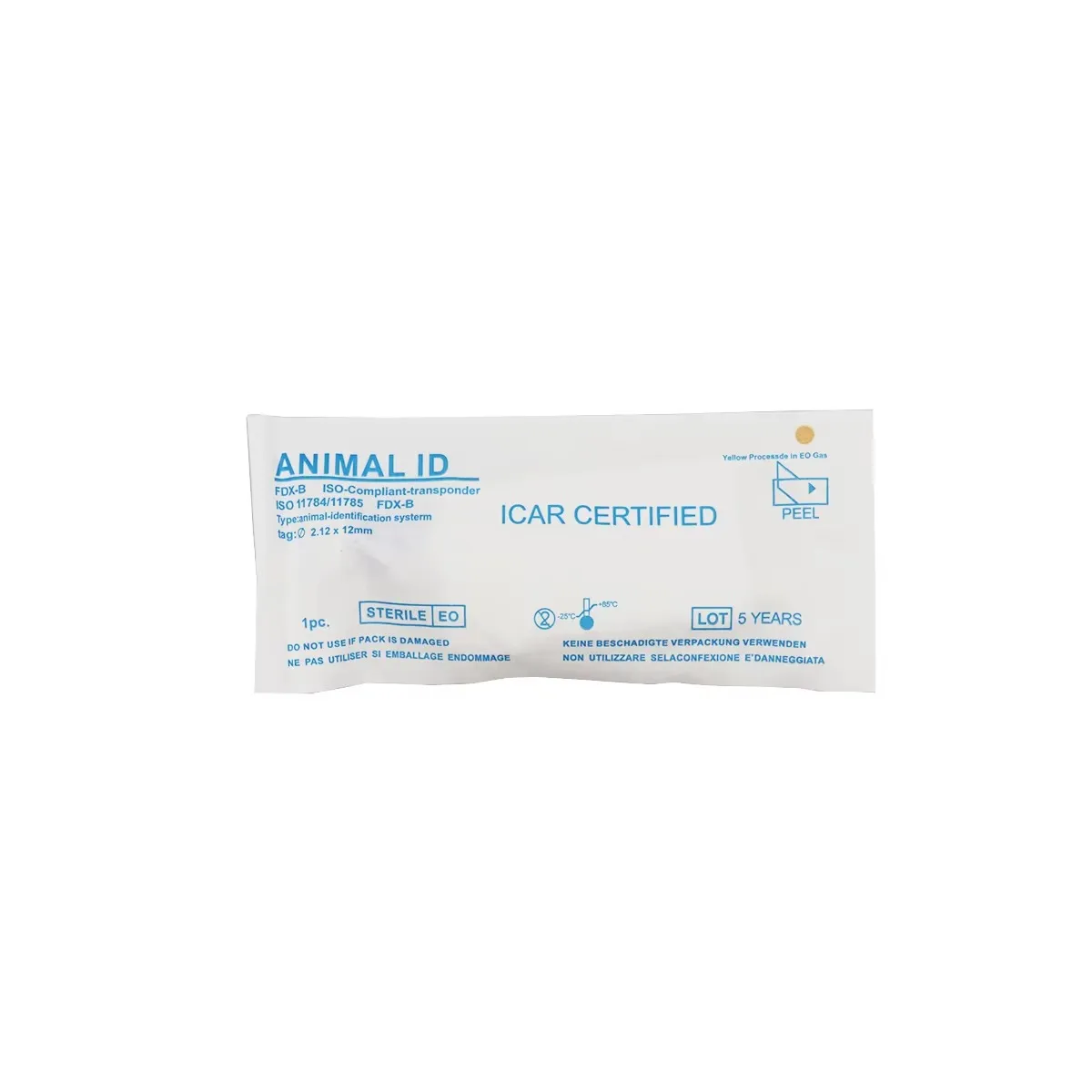
134.2 kHz Animal Identity Tag Passive RFID Identification for Global Livestock and Pet Management
A passive 134.2 kHz RFID animal ID tag engineered for subcutaneous implantation or external tracking across pets, livestock, and aquatic species. Featuring ISO 11784/11785 compliance and biocompatible construction, this tag enables permanent, non-invasive identification with 99.7%+ read reliability, meeting global animal management, traceability, and compliance standards.
Introduction
A 134.2 kHz animal ID tag represents a cornerstone of modern livestock and companion animal management, leveraging low-frequency (LF) radio frequency identification (RFID) technology to provide permanent, contactless animal identification. Unlike active tags requiring batteries, these passive devices operate through inductive coupling with compatible readers, transmitting a unique 8-byte identifier stored in a planar transponder chip. Designed for subcutaneous implantation or external attachment, this technology addresses critical needs for traceability, health monitoring, and regulatory compliance across diverse animal categories: domestic pets requiring identification during lost-and-found procedures, livestock enabling supply chain accountability, and aquatic species facilitating stock management in aquaculture systems or marine research.
Technology Overview
At the core of the 134.2 kHz animal ID tag is its reliance on LF (134.2 kHz) electromagnetic fields, a frequency optimized for biocompatibility and deep tissue penetration. Key technical specifications include:
- Frequency & Operation: Passive RFID with no internal power source, operating via inductive coupling from reader antennas. The near-field communication ensures read ranges of 5–10 cm, balancing precision with safety for subcutaneous positioning.
- Chip Architecture: Typically based on FDX-B (ISO 11784-11785 compliant) or HDX protocols, offering 8-bit EPC memory (128 bits total) with a 16-bit checksum for data integrity. Customizable unique identifiers (UIDs) can be pre-programmed during manufacturing, ensuring interoperability with global animal management systems.
- Data Standards: Aligned with ISO/IEC 17357 (Animal Identification Data Exchange) and IEC 60068 environmental testing standards, ensuring compatibility across regional markets and reader systems. These standards eliminate proprietary lock-in, making the tag suitable for both local and international distribution networks.
Product Characteristics
The 134.2 kHz animal ID tag’s physical and functional design prioritizes reliability in variable environments:
- Physical Form: Standard variants feature a biocompatible glass or titanium alloy encapsulation (1.2–2.5 mm diameter × 10–15 mm length for rodent models, 2.0–3.0 mm diameter for livestock), with options for extended or compressed shapes to accommodate different species’ anatomy.
- Implantation & Usage: Subcutaneous insertion via sterile, minimally invasive methods (e.g., needle delivery for small animals, surgical placement for large livestock) ensures non-invasive long-term tracking. External attachment options (e.g., flexible adhesive bands) supplement temporary identification needs in research or rescue scenarios.
- Performance Metrics: Proven 99.7%+ read success rates across standard reader distances, with embedded data storage retaining integrity for 15+ years in subcutaneous tissue. The tag’s hermetic seal resists body fluids, antibiotics, and environmental contaminants, ensuring readability even in high-moisture or saline environments.
Application Scenarios
The versatility of 134.2 kHz animal ID tags spans multiple verticals:
- Pet Identification: For dog and cat owners, these tags provide permanent pedigree verification and lost pet recovery. Veterinarians use the tags to track vaccination history across multiple visits, while breeders benefit from standardized lineage documentation.
- Livestock Traceability: In cattle, sheep, and pig operations, tags enable end-to-end supply chain tracking—from birth certificates to abattoir records—supporting EU ETS, US National Animal Identification System (NAIS), and other regional traceability mandates. Farmers leverage read/write capabilities to update health records and breeding data in real time.
- Aquaculture Management: For fish, shrimp, and aquatic mammals, the tag’s waterproof design (certified IP68 for freshwater/marine exposure) tracks migration patterns, stock counts, and environmental stressors without disrupting delicate biological systems. This reduces stock loss and optimizes resource allocation.
- Research Animal Tracking: In laboratory settings, 134.2 kHz tags identify rodents, rabbits, and primates for ethical compliance, reducing mix-ups in experimental groups and streamlining regulatory reporting.
Compatibility
Interoperability is a core strength:
- Reader Systems: Compatible with LF RFID readers (e.g., Allflex, Neogen, Hanwell) and custom integrations, including FDX-B animal identification readers.
- Software Integration: Works with enterprise resource planning (ERP) platforms (e.g., AgriWebb, FarmERP) and cloud-based databases, enabling real-time data transfer and analytics.
- Global Standards Alignment: Rigorous testing against ISO 11784/11785 ensures cross-border usability, eliminating regional compliance barriers for international distributors and importers.
Quality & Reliability
Manufactured to exceed industry durability benchmarks:
- Lifespan: 15+ years of subcutaneous stability in mammals, 10+ years in aquatic environments, verified through accelerated aging tests and in-vivo trials.
- Environmental Resistance: Withstands -40°C to 85°C (temperature cycling in livestock barns), 100% humidity, UV exposure, and magnetic fields up to 1000 A/m (common in industrial farming equipment).
- Production Consistency: ISO 9GMP-certified facilities ensure batch-to-batch UID consistency, with 100% automated testing (100% defect screening via AOI systems and read/write verification).
OEM / ODM Capability
Recognizing diverse market needs, DO RFID Tag Factory offers comprehensive customization:
- Size & Form: Tailored dimensions (e.g., 2.12mm × 12mm for small mammals, 4mm × 25mm for large livestock) and shapes (straight, curved, or specialized for specific species).
- Chip & Coding: FDX-B/HDX compatibility with customizable UID ranges, batch/lot code encryption, and regional regulatory encoding (e.g., USDA-required 10-digit codes).
- Packaging & Labeling: Bulk packaging (1000 per box), sterile blister packs, or custom cartons with branding, barcodes, and QR codes for end-user identification.
- Volume Production: Scalable manufacturing supports 100,000+ units monthly, ensuring timely fulfillment of global distribution orders and OEM contracts.
Supplier Perspective
Distributors and system integrators choose DO RFID Tag Factory’s 134.2 kHz animal ID tags due to:
- Compliance Assurance: ISO 13485 medical device certification for implantable components ensures regulatory approval across markets.
- Technical Support: Dedicated R&D staff collaborates with integrators to optimize read ranges and data flow for custom systems.
- Supply Chain Stability: Vertical integration (glass encapsulation manufacturing, chip sourcing) minimizes lead times and mitigates global component shortages.
- Sustainability: Biodegradable implantation options and recyclable packaging reduce environmental impact, aligning with green supply chain initiatives.
Call to Action
To explore tailored solutions for your market or request technical samples, contact DO RFID Tag Factory’s sales team directly via email at [email protected] or phone. We welcome distributors, integrators, and researchers to schedule technical consultations to align tag specifications with your unique operational needs. “Discover how 134.2 kHz RFID technology can transform your animal identification workflows—request a detailed technical datasheet today.”