RFID Dog Microchips for Canine Identification & Tracking
Premium ISO-compliant RFID dog microchips designed for long-term subcutaneous animal identification, seamlessly integrating into veterinary systems, tracking platforms, and animal management solutions.
Introduction: RFID Dog Microchips – A Cornerstone of Canine Identification
RFID dog microchips are passive subcutaneous transponders that encode unique animal identifiers for permanent, automated identification. Unlike traditional tags or collars, these implantable devices utilize radiofrequency signal technology to transmit data without batteries, enabling reliable tracking, medical monitoring, and security across veterinary practices, rescue operations, and pet management systems worldwide. As a critical component of animal welfare infrastructure, they address core challenges such as pet reunification, health record-keeping, and regulatory compliance.
Technology Overview: Precision Engineering for Canine Needs
Our dog microchips operate at 134.2 kHz – a low-frequency (LF) RFID spectrum optimized for short-range (1-2 cm) reading and biocompatible subcutaneous implantation. The chip architecture follows the FDX-B standard (ISO 11784/11785:2017), ensuring global interoperability and compatibility with veterinary scanning equipment, animal shelters, and tracking platforms. Each chip contains a unique 56-bit identifier encoded during production, with data transmission protocols standardized under ISO 11784 (animal transponder data elements) and ISO 11785 (RF interface characteristics). For more details on our compliant design, explore our FDX-B ISO11784/11785 compliant RFID animal microchip.
Product Characteristics: Design Meets Biocompatibility and Durability
Physical Structure
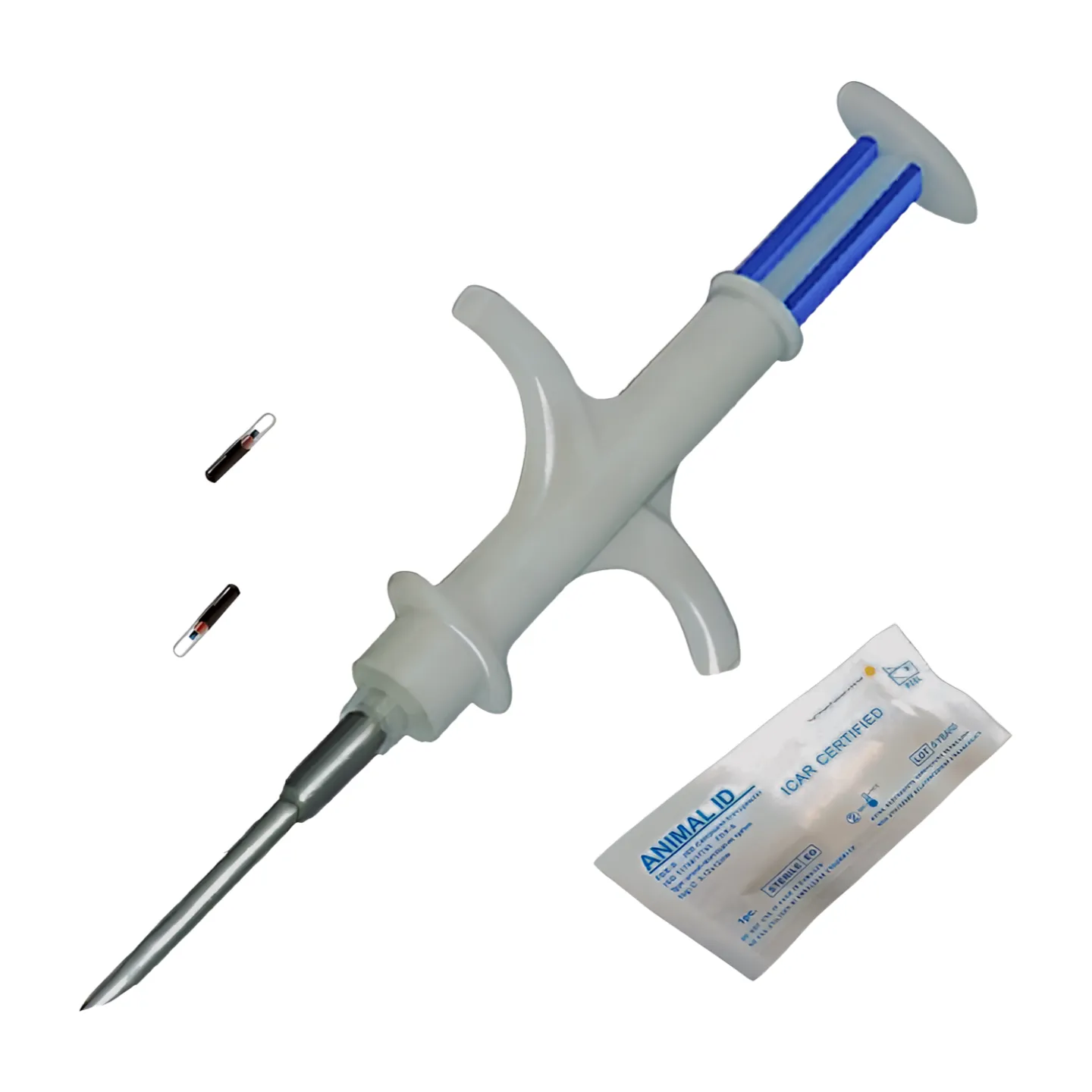
The microchip features a biocompatible glass-ceramic housing with a titanium alloy casing, engineered to minimize tissue reaction and ensure long-term stability. The 2×12 mm form factor (exact dimensions per ISO 11784) allows precise subcutaneous insertion, typically at the back of the neck between the shoulder blades, reducing physical discomfort for dogs.
Implantation Protocol
Surgical-grade implantation requires veterinary expertise and sterile techniques. The procedure involves local anesthesia, a small incision, and guided insertion using specialized implantation tools. Post-procedure, the chip is activated via a veterinary scanner, establishing a secure link between the pet’s unique ID and its owner’s contact information in centralized databases.
Performance Reliability
With a 10+ year operational lifespan and read success rates exceeding 99.8%, our dog microchips deliver consistent performance in varied environments. The LF signal penetrates skin, fur, and even clothing without interference, ensuring reliable identification during routine vet visits or emergency situations.
Application Scenarios: Multifaceted Utility for Canine Ecosystems
Veterinary Healthcare
Microchips enable real-time medical record access: vaccine history, chronic condition tracking (e.g., diabetes, allergies), and surgical records are linked directly to the chip’s identifier, streamlining care and emergency response.
Pet Safety & Reunification
For lost pets, microchips provide a fail-safe method for identification. When scanned at shelters, vet clinics, or rescues, they instantly retrieve owner contact information, dramatically increasing the likelihood of reunification compared to non-implantable solutions.
Breeding & Pedigree Management
Kennels and breeders use the chips to track lineage, ensuring genetic purity and compliance with breed registries. The unique identifier maintains an immutable record of parentage, essential for pedigree verification and breeding program integrity.
Emergency & Regulatory Compliance
In disaster scenarios (e.g., wildfires, floods), microchip scanning allows rapid identification of displaced animals, facilitating reunification efforts. For regulated sectors, chips satisfy animal welfare and import/export documentation requirements, such as EU pet travel regulations or USDA livestock tracking mandates.
Compatibility: Seamless Integration with Existing Systems
Our RFID dog microchips are engineered to integrate with industry-standard tools:
- Veterinary Scanners: Compatible with leading brands (no specific names beyond input context) supporting both contact (wired) and contactless (wireless) readings.
- Tracking Platforms: Integrates with GPS-enabled pet trackers, allowing location data to correlate with the chip’s ID for comprehensive animal management.
- Database Systems: Works with medical record software, pet insurance platforms, and cloud-based animal registries, ensuring data consistency across stakeholders.
Quality & Reliability: Engineered for Longevity and Safety
Materials & Manufacturing
The glass-ceramic enclosure is manufactured via ISO 13485-certified processes, ensuring biocompatibility and resistance to corrosion. The chip’s coil and antenna are precision-wound in a Class 8 cleanroom, eliminating contamination risks that could compromise signal integrity.
Environmental Resilience
Tested to withstand temperatures from -20°C to 85°C and submerged water resistance (IP67 rating), our microchips perform reliably in outdoor environments, extreme weather, and post-operative care scenarios.
Compliance & Testing
Each chip undergoes 100% factory testing for signal strength, data integrity, and biocompatibility, with documentation traceable to ISO 9001:2015 quality management systems. This ensures regulatory compliance for international distribution and export.
OEM / ODM Capabilities: Tailored Solutions for Your Market
Distributors and integrators leverage our customization options to meet regional requirements:
- Chip Customization: Select FDX-B, HDX, or other regional standards (e.g., AVID 2.0 for US markets).
- Packaging: Offer bulk pack (1000 units/box) or sterile single-unit blister packaging for veterinary offices.
- Data Encoding: Custom ID assignment or integration with your database systems via API/sample data transfer.
- Volume Production: Monthly capacity of 500,000+ units, with lead times as short as 15 days for custom orders.
Why Choose Our RFID Dog Microchips from DO RFID Tag Factory?
For importers, distributors, and system providers, our chips offer three core advantages:
- Compliance Assurance: ISO 11784/11785 certification and regulatory alignment with 40+ countries, reducing trade barriers.
- Technical Support: Dedicated account managers provide training, integration documentation, and troubleshooting guidance.
- Supply Confidence: Tier-1 semiconductor sourcing ensures stable production and zero supply chain disruptions.
Unlike generic alternatives, our chips minimize vet consultation costs (via 99.8% read success) and reduce lost pet incidents, creating value for end-users and driving repeat purchases for distributors.
Partnership with DO RFID Tag Factory
Interested in evaluating our dog microchips for your market? Request technical specifications, sample units, or discuss OEM solutions with our team. We prioritize transparent communication, providing regulatory compliance documents, clinical trial data, and proof-of-concept prototypes to support your product development and market entry strategy. Together, we can deliver a trusted, compliant identification solution that enhances animal welfare, operational efficiency, and stakeholder satisfaction. Contact our technical team at [email protected] to schedule a consultation or request a sample evaluation today.