
-
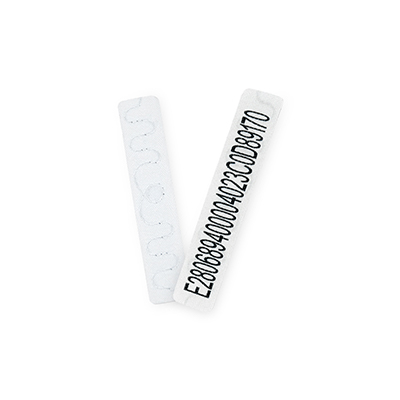
Core Function Difference: RFID laundry tags use radio frequency to transmit data without line-of-sight, while barcodes rely on optical scanning that requires direct visibility of the label.
-
Industry Application Scope: RFID is widely used in industrial laundries, hospitals, and large hotels; barcode is more common in small restaurants, boutique hotels, and low-volume textile management.
-
Long-Term Cost Trend: RFID costs have dropped by 30% since 2023, narrowing the gap with barcode—by 2025, bulk RFID tags (10,000+ units) are only 5x more expensive than barcode labels, down from 8x in 2020.
Critical Reminder: Choosing the right technology depends on your textile volume, wash frequency, and data needs—not just upfront cost.
Key Performance Metrics Comparison 2025
Scanning Efficiency
-
RFID: Scans 120+ textile items per minute (bulk mode with UHF readers), suitable for industrial laundries processing 5,000+ items daily.
-
Barcode: Scans 15–20 items per minute (single-item mode), only feasible for businesses with <1,000 items weekly.
Durability in Laundry Cycles
-
RFID: Silicone RFID tags withstand 500–800 wash cycles at 120°C; reinforced plastic tags last 1,000+ cycles (ideal for work uniforms).
-
Barcode: Paper barcode labels fail after 30–50 cycles; waterproof polyester labels last 80–100 cycles (not for high-wear items).
Data Storage & Access
-
RFID: Stores 128–256 bits of data (wash cycle count, client ID, textile type) and updates in real time via scanner.
-
Barcode: Stores 18–32 characters (only a unique ID) and requires manual data entry to track additional details.
Cost Breakdown for Small Medium and Large Businesses
Small Businesses (20–50 Employees)
-
RFID Setup Cost: $800–$1,200 (500 textile tags: $250–$500, 1 handheld UHF reader: $500–$700, basic software: $50–$100).
-
Barcode Setup Cost: $200–$350 (1,000 polyester labels: $30–$50, 1 handheld scanner: $150–$250, free software: $0–$50).
Best Fit: Barcode (if 500 items monthly to avoid frequent label replacement).
Medium Businesses (51–200 Employees)
-
RFID Setup Cost: $3,000–$5,000 (3,000 silicone tags: $1,500–$2,100, 2 fixed UHF readers: $2,000–$2,500, cloud software: $300–$500).
-
Barcode Setup Cost: $1,200–$1,800 (5,000 waterproof labels: $150–$250, 3 scanners: $600–$900, paid software: $200–$300).
Best Fit: RFID (saves 15–20 hours weekly in labor costs; ROI achieved in 7–9 months).
Large Businesses (200+ Employees)
-
RFID Setup Cost: $8,000–$12,000 (10,000 reinforced tags: $8,000–$10,000, 4 fixed readers + 5 handheld scanners: $3,000–$4,000, enterprise software: $1,000–$1,500).
-
Barcode Setup Cost: $5,000–$7,000 (20,000 labels: $600–$1,000, 8 scanners: $2,400–$3,200, enterprise software: $1,500–$2,000 + $1,000–$1,500 annual label replacement).
Best Fit: RFID (avoids \$10,000+ annual label replacement costs; improves tracking accuracy by 40%).
Real World Case Studies 2025
Case 1 Industrial Laundry Houston TX
-
Challenge: Processed 12,000 restaurant linens weekly with barcode—spent 12 hours daily sorting and scanning; 30% of labels failed after 40 cycles.
-
Solution: Switched to UHF RFID tags (silicone, \$0.70 per unit) and 2 fixed readers.
-
Results: Scanning time reduced to 2 hours daily; label replacement cost dropped from $1,800 to $300 monthly; ROI in 6 months.
Case 2 Boutique Hotel Asheville NC
-
Challenge: Managed 800 linens (sheets towels napkins) with RFID—paid \$900 upfront but only used 30% of scanning capacity.
-
Solution: Switched to barcode for napkins (polyester labels, \$0.04 per unit) and kept RFID for sheets/towels.
-
Results: Annual cost cut by \$350; inventory checks still completed in 45 minutes (vs. 2 hours with full barcode).
Case 3 Hospital Chicago IL
-
Challenge: Tracked 2,000 sterile scrubs with barcode—failed to meet HIPAA data requirements; 50% of labels smudged during sterilization.
-
Solution: Implemented medical-grade RFID tags (ISO 10993 certified, \$0.90 per unit) and HIPAA-compliant software.
-
Results: 100% compliance with data regulations; scrub loss reduced from 15% to 3%; sterilization cycle tracking automated.
Future Trends and Adaptation Tips 2025 2030
Technology Trends
-
RFID: UHF RFID tag prices will drop to $0.15–$0.80 per unit by 2027 (bulk orders); AI-integrated RFID software will predict textile replacement needs.
-
Barcode: Nanocoated barcode labels will extend durability to 200+ cycles by 2028; but still lack real-time data update capability.
Adaptation Strategies for Businesses
-
For Barcode Users: Upgrade to waterproof labels if replacement rates >40% monthly; test 100 RFID tags annually to assess cost changes.
-
For RFID Users: Add multi-functional scanners (read both RFID and barcode) to prepare for potential hybrid systems.
-
For All Users: Invest in cloud-based software that supports both technologies—avoids replatforming costs if you switch later.
Final Decision Framework Step by Step
-
Calculate your monthly textile volume: 5,000 items (RFID).
-
Assess wash frequency: 200 cycles/year (RFID).
-
Evaluate data needs: Basic ID tracking (barcode); real-time updates + cycle counting (RFID).
-
Test with 100–200 samples: Most suppliers offer free RFID tags and barcode labels—run 10 wash cycles to compare durability.
Final Tip: Don’t overinvest in technology you don’t need—start small and scale as your business grows.
Hybrid System Implementation Guide for Mixed Textile Needs
When to Adopt a Hybrid System
-
Your business manages both high-wear/high-volume and low-wear/low-volume textiles (e.g., a hotel with 3,000 towels + 1,000 decorative pillows).
-
You’re transitioning from barcode to RFID and need a 3–6 month overlap to avoid operational gaps.
-
You want to balance cost efficiency (barcode for low-impact items) and tracking accuracy (RFID for critical items).
Step-by-Step Setup Process
- Categorize Textiles by Priority and Usage
-
RFID-Required Items: High-wear, high-value textiles (e.g., industrial aprons, hospital scrubs) with >200 annual wash cycles.
-
Barcode-Only Items: Low-wear, low-cost textiles (e.g., restaurant napkins, hotel throw blankets) with <50 annual wash cycles.
-
Dual-Tracked Items: Moderate-use textiles (e.g., hotel sheets) where RFID tracks location + barcode serves as a backup.
- Select Compatible Hardware & Software
-
Scanner: Choose a multi-functional device (e.g., Zebra DS9900) that reads both RFID and barcode—costs $400–$600, avoiding $300–$500 for separate scanners.
-
Software: Opt for cloud-based platforms (e.g., TagMatiks Laundry) that integrate data from both technologies into one dashboard—eliminates manual data merging.
- Design Workflows for Seamless Operation
-
RFID Workflow: Install fixed readers at laundry intake/output for bulk scanning (100+ items/minute); use handheld scanners for weekly inventory checks.
-
Barcode Workflow: Assign staff to scan low-volume items during folding; use mobile apps (e.g., Scandit) for on-the-spot tracking of decorative textiles.
- Calculate 2-Year TCO for Hybrid vs Single Systems
-
Example: A mid-sized hotel with 4,000 textiles (3,000 towels + 1,000 pillows)
-
Hybrid TCO: $2,100 (3,000 RFID tags: $1,500; 1,000 barcode labels: $40; 1 multi-scanner: $500; software: $300; maintenance: $260)
-
RFID-Only TCO: $3,200 (4,000 RFID tags: $2,000; 1 RFID scanner: $600; software: $300; maintenance: \$300)
-
Barcode-Only TCO: $2,800 (4,000 barcode labels: $160; 1 barcode scanner: $300; software: $200; maintenance: \$2,140)
Key Benefit: Hybrid systems reduce 2-year TCO by 18–25% vs single-technology setups for mixed textile portfolios.
-
FAQs: Common Questions About RFID vs Barcode in Laundry Tracking
1. Can RFID tags and barcode labels be reused on new textiles?
-
RFID Tags: Yes—industrial silicone/RFID tags can be removed from worn textiles (e.g., torn uniforms) and reattached to new ones, cutting replacement costs by 40%.
-
Barcode Labels: No—most labels peel or damage fabric when removed; reusing leads to 60% read failure, so new labels ($0.03–$0.05 each) are required for new textiles.
2. How do both technologies perform in wet or dirty laundry conditions?
-
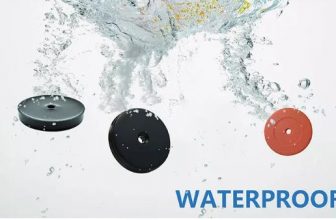
RFID: UHF RFID tags with IP68 waterproof rating maintain 95%+ read rate even on soiled linens—moisture or dirt doesn’t interfere with radio signals.
-
Barcode: Water or grease smudges barcodes, causing 30–50% read failure—requires cleaning textiles before scanning (adds 1–2 hours of daily labor).
3. Do I need IT support to install and maintain these systems?
-
RFID: Basic setups (handheld scanner + cloud software) need no IT support—suppliers provide 30-minute training videos. Enterprise setups (multiple fixed readers) may need 1–2 hours of IT help for network integration.
-
Barcode: All setups are plug-and-play—staff can start scanning within 10 minutes (no IT support required; free app tutorials available).
4. Which technology is more secure for sensitive client data (e.g., hospital patient info)?
-
RFID: UHF RFID tags support data encryption (e.g., AES-128) and integrate with HIPAA/GDPR-compliant software—prevents unauthorized access to client IDs.
-
Barcode: Barcodes store unencrypted data—anyone with a scanner can read basic IDs, posing risks for healthcare or luxury hospitality businesses.
5. What’s the minimum order quantity for RFID tags vs barcode labels?
-
RFID Tags: Suppliers require minimum orders of 500–1,000 units; bulk pricing (10%+ discount) starts at 5,000 units.
-
Barcode Labels: Minimum orders of 100 units; bulk pricing (15%+ discount) starts at 1,000 units—ideal for small businesses testing the technology.
Post-Implementation Optimization Checklist
- Monitor Performance Weekly
-
For RFID: Track read rate—if below 90%, adjust reader position (move 1m away from metal) or reposition tags (sew to textile corners).
-
For Barcode: Log label replacement rate—if >40% monthly, upgrade to nanocoated waterproof labels (\$0.02 more per unit, cuts replacements by 35%).
- Train Staff on Best Practices
-
RFID Training: Teach staff to avoid scanning near metal shelves (interferes with signals) and to inspect tag stitching monthly (repair loose tags immediately).
-
Barcode Training: Show staff to scan labels at a 45° angle (reduces read errors by 25%) and to use alcohol wipes for smudged labels.
- Update Software Regularly
-
RFID software updates (monthly) improve bulk scanning speed by 10–15% and add features like wash cycle alerts.
-
Barcode software updates (quarterly) fix sync errors with inventory systems and enhance mobile scanning stability.
Final Note: The best tracking technology evolves with your business. By combining regular performance checks with supplier support, you can ensure your system remains efficient, cost-effective, and aligned with growing textile needs.