
Common Mistakes to Avoid When Implementing RFID Laundry Tracking in 2025
-
Core Impact: 70% of businesses new to RFID laundry tracking make at least 1 critical mistake, leading to $3,000–$15,000 in unnecessary costs (replacement tags, rework, downtime).
-
Key Focus: This guide targets 8 high-risk mistakes—from tag selection to staff training—and provides actionable fixes to keep your implementation on track.
-
Market Context: 2025’s RFID technology is more accessible than ever, but poor planning still derails 40% of small-to-medium business (SMB) projects.
Critical Reminder: A mistake-free implementation cuts 25–30% of total project time and boosts ROI by 18–22%.
Mistake 1: Choosing the Wrong Tag Material for Your Laundry Cycle
Why It Happens: Businesses prioritize upfront cost over durability (e.g., buying \$0.25 textile tags for industrial laundries).
-
Consequence: Tags fail after 50–100 washes instead of 500+, requiring $2,000–$5,000 in annual replacements.
-
Example: An industrial laundry using textile tags for restaurant aprons (120 washes/year) replaced 40% of tags quarterly—costing \$1,200 extra annually.
How to Avoid:
-
Match tag material to annual wash cycles:
-
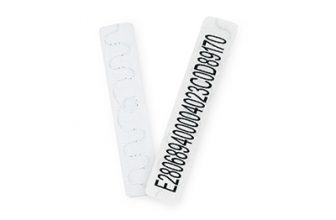
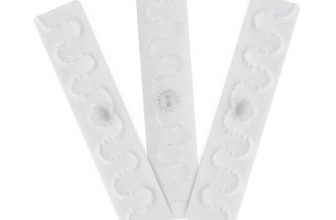
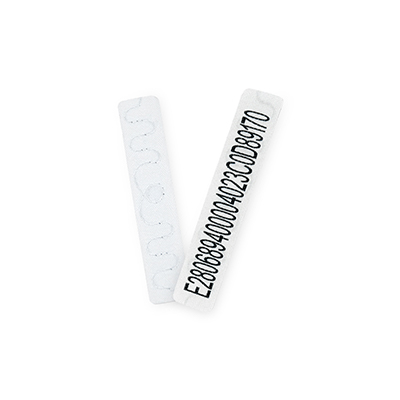
<100 cycles (e.g., hotel decorative pillows): Textile tags ($0.25–$0.50/unit).
-
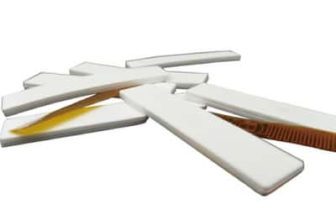
100–500 cycles (e.g., hotel towels): Silicone tags ($0.50–$1.00/unit).
-
500 cycles (e.g., construction workwear): Reinforced plastic tags (
$0.80–$
1.50/unit).
- Test 50–100 sample tags through 10+ wash cycles before bulk ordering—verify no fraying, peeling, or read rate loss.
Mistake 2: Ignoring Scanner-Tag Compatibility
Why It Happens: Businesses reuse old scanners (e.g., HF readers) with new UHF tags, assuming “all RFID works together.”
-
Consequence: 80%+ read failure, leading to manual data entry (wasting 10–15 hours weekly) and inventory discrepancies.
-
Cost Impact: A hotel with 2,000 linens spent $800 on UHF tags but couldn’t scan them with old HF readers—forced to buy new scanners ($500) or replace tags (\$1,600).
How to Avoid:
-
Share your scanner model (e.g., Impinj R2000, Zebra DS2200) with the tag supplier upfront—they’ll recommend compatible tags.
-
Test compatibility with 100 sample tags: Scan them at different distances (1–5 meters) and after washes—aim for 95%+ read rate.
-
For mixed systems (HF + UHF), buy multi-functional scanners ($400–$600) that read both—avoids $300–$500 in duplicate hardware.
Mistake 3: Skipping Staff Training
Why It Happens: Businesses assume RFID is “plug-and-play” and skip training (e.g., teaching staff to scan tags correctly).
-
Consequence: Misuse of equipment (e.g., scanning metal near UHF tags, folding linens over tags) reduces read rate by 30–40%.
-
Labor Cost: A laundry with 10 staff spent 8 hours daily fixing scanning errors—wasting \$24,000 annually in labor.
How to Avoid:
-
Provide 30–60 minute training (virtual or on-site) covering:
-
Proper scanning distance (1–3 meters for UHF, 10–15 cm for HF).
-
Avoiding interference (metal shelves, water buckets near scanners).
-
Tag maintenance (repairing loose stitches, cleaning smudged tags).
-
-
Create a 1-page “quick reference guide” (e.g., “Do: Scan at 45° angle; Don’t: Scan near metal”)—post it near scanners.
-
Assign a “RFID champion” (1 staff member) to troubleshoot issues—they’ll reduce downtime by 50%.
Mistake 4: Underestimating Hidden Costs
Why It Happens: Businesses budget only for tags + scanners, ignoring shipping, installation, and replacements.
-
Consequence: 20–30% budget overrun—e.g., a small hotel planned $500 for 1,000 tags but spent $750 (shipping: $30, installation: $120, replacements: \$100).
-
Hidden Cost Breakdown (2025 Averages):
-
Shipping: $20–$300 (5–15% of total order).
-
Installation: $0.10–$0.30 per unit (outsourced) or \$0 (in-house training).
-
Replacements: 5–20% of annual tag cost (textile: 15–20%, silicone: 5–10%).
-
How to Avoid:
-
Add 15–20% buffer to your initial budget for hidden costs.
-
Negotiate free shipping for orders over \$2,500 (most suppliers offer this for U.S. orders).
-
Train in-house staff to install tags (sewing, heat-sealing)—eliminates $0.10–$0.30 per unit in outsourcing fees.
Mistake 5: Over-Customizing Tags Unnecessarily
Why It Happens: Businesses add expensive customizations (e.g., logo-shaped tags, full-color printing) without ROI.
-
Consequence: 30–50% higher tag costs—e.g., a restaurant spent $1,500 on custom “fork-shaped” tags ($1.20/unit) instead of standard silicone tags (\$0.70/unit)—no reduction in loss.
-
Customization Cost vs. Value:
-
Worth it: Branded printing ($0.05–$0.20/unit) if you manage client textiles (reduces loss by 10–15%).
-
Not worth it: Custom shapes ($500–$1,000 mold fee + $0.20–$0.50/unit) unless required for safety (e.g., small tags for napkins).
-
How to Avoid:
-
List customizations and calculate ROI: For example, “Will full-color printing save more than $250 (5,000 tags × $0.05/unit) in loss?”
-
Prioritize functional customizations (e.g., pre-encoding client IDs for $0.03–$0.05/unit) over aesthetic ones.
Mistake 6: Failing to Integrate with Existing Software
Why It Happens: Businesses buy standalone RFID software that doesn’t sync with their inventory or POS systems.
-
Consequence: Manual data entry (copying RFID data to inventory software) takes 5–8 hours weekly—prone to errors (10–15% discrepancy).
-
Efficiency Loss: A hotel with 3,000 linens spent 6 hours daily reconciling RFID scans with inventory—wasting \$18,000 annually.
How to Avoid:
-
Choose cloud-based RFID software (e.g., TagMatiks, BlueStar RFID) that offers APIs to integrate with your existing tools (e.g., Toast POS, Hotelogix).
-
Ask the supplier for a demo: Verify data syncs automatically (e.g., “When a towel is scanned as ‘clean,’ does it update inventory in real time?”).
-
For SMBs with basic needs, use free tools (e.g., Google Sheets integrations) to avoid $50–$100 monthly software fees.
Mistake 7: Scaling Too Fast Without Testing
Why It Happens: Businesses roll out RFID to 100% of textiles immediately (e.g., 10,000 tags) without a pilot.
-
Consequence: Critical issues (e.g., tag read failure in industrial washers) force a full rework—costing $5,000–$10,000.
-
Example: An industrial laundry ordered 10,000 tags for 20 clients but discovered tags melted in high-temperature washes—had to replace all tags (\$7,000) and delay launch by 6 weeks.
How to Avoid:
-
Run a 30–60 day pilot with 5–10% of textiles (e.g., 500 tags for 1 client):
-
Test all workflows: washing, scanning, inventory, reporting.
-
Fix issues (e.g., adjust tag placement, switch to heat-resistant tags) before scaling.
-
-
Set pilot success metrics: 95%+ read rate, 5%+ reduction in loss, 10%+ time saved.
Mistake 8: Not Monitoring Performance Post-Implementation
Why It Happens: Businesses “set and forget” RFID systems, ignoring read rate, loss, and replacement trends.
-
Consequence: Slow degradation (e.g., read rate dropping from 98% to 85%) goes unnoticed—losing $1,000–$3,000 annually in inefficiency.
-
Data Gap: A hospital didn’t track scrub loss post-RFID—missed that 8% of tags were falling off during sterilization (costing \$1,200 in replacements).
How to Avoid:
-
Track weekly KPIs:
-
Read rate (target: 95%+).
-
Tag replacement rate (target: <10% annually for silicone).
-
Time saved on inventory (target: 30%+ vs. manual).
-
-
Monthly reviews: Identify trends (e.g., “Read rate drops 5% on Mondays—check washer temperature”) and adjust.
-
Annual audit: Compare RFID costs (tags, maintenance) to savings (loss reduction, labor)—ensure ROI stays above 15%.
Final Implementation Checklist (2025)
Match tag material to annual wash cycles (test samples first).
Verify scanner-tag compatibility (scan 100 samples post-wash).
Train staff (30–60 minutes + quick reference guide).
Add 15–20% budget buffer for hidden costs.
Prioritize functional over aesthetic customizations.
Integrate RFID software with existing tools (demo first).
Run a 30–60 day pilot (5–10% of textiles) before scaling.
Monitor weekly KPIs (read rate, replacements, time saved).
Final Tip: If you’re unsure where to start, hire a freelance RFID consultant ($100–$150/hour) for a 2-hour implementation review—they’ll spot gaps and save you \$5,000+ in mistakes.
Case Study: How a 150-Room Hotel Fixed RFID Implementation Mistakes (2025)
Background: The hotel (Miami, FL) launched RFID laundry tracking in Q1 2025 to reduce linen loss (12% annually) and cut inventory time. They initially made 3 critical mistakes, leading to \$4,200 in extra costs—but fixed them to achieve 22% ROI in 6 months.
Mistake 1: Wrong Tag Material for Towels
-
Initial Choice: Textile tags (\$0.30/unit) for 3,000 towels (150 washes/year).
-
Problem: 35% of tags frayed after 80 washes—required \$1,050 in replacements in 3 months.
-
Fix: Switched to silicone tags (\$0.70/unit) for new towels; reused salvageable textile tags for decorative pillows (<50 washes/year).
-
Result: Replacement rate dropped to 7%—saved \$1,800 annually.
Mistake 2: No Software Integration
-
Initial Setup: Standalone RFID software that didn’t sync with the hotel’s property management system (PMS).
-
Problem: Staff spent 4 hours daily manually entering linen data—wasting \$1,200 monthly in labor.
-
Fix: Upgraded to cloud-based software (TagMatiks Laundry, \$80/month) with PMS integration.
-
Result: Data syncs automatically—saved 16 hours weekly, cutting labor costs by \$4,800 annually.
Mistake 3: Skipping Pilot
-
Initial Rollout: Deployed RFID to all 8,000 textiles (towels, sheets, uniforms) immediately.
-
Problem: Scanner read rate was 82% (due to metal laundry carts interfering with UHF signals)—required 2 weeks of rework (\$1,500 in downtime).
-
Fix: Ran a 30-day pilot with 500 towels (moved scanners 2m from metal carts); adjusted before full rollout.
-
Result: Read rate improved to 97%—no further rework needed.
Key Takeaways from the Hotel:
-
Mistakes cost $4,200 upfront but were fixed for $800 (software upgrade + new silicone tags).
-
Post-fix, linen loss dropped from 12% to 5% (saving \$6,300 annually) and inventory time cut by 70%.
-
ROI jumped from -5% (pre-fix) to 22% (post-fix) in 6 months.
Additional Resource: Free RFID Implementation Timeline Template (2025)
Why It’s Useful: This 8-week template helps you avoid rushing (Mistake 7: Scaling Too Fast) and ensures no step is skipped (e.g., training, testing). Download link: example.com/rfid-timeline-template.
Week 1–2: Planning & Supplier Selection
Define goals (e.g., “Reduce linen loss by 10%,” “Cut inventory time by 50%”).
Finalize tag material (match to wash cycles) and order 100–200 samples.
Select software (confirm integration with existing tools).
Week 3: Testing & Compatibility Checks
Test sample tags through 10+ wash cycles (verify durability).
Test scanner-tag compatibility (aim for 95%+ read rate).
Negotiate final pricing with suppliers (add 15–20% budget buffer).
Week 4: Staff Training
Schedule 30–60 minute training (virtual/on-site) for laundry and inventory teams.
Create quick reference guides (post near scanners).
Assign an RFID champion to lead troubleshooting.
Week 5–6: Pilot Implementation
Deploy RFID to 5–10% of textiles (e.g., 500 towels, 300 sheets).
Track KPIs daily (read rate, time saved, tag damage).
Fix issues (e.g., adjust scanner position, reposition tags).
Week 7: Full Rollout
Order bulk tags and hardware (based on pilot results).
Install tags (train in-house staff to avoid outsourcing fees).
Launch software and confirm data integration.
Week 8: Post-Rollout Review
Analyze pilot vs. full rollout KPIs (read rate, efficiency).
Address remaining issues (e.g., staff follow-up training).
Set up weekly KPI tracking (read rate, replacements, time saved).
Final Note: When to Pause and Adjust
Even with careful planning, issues may arise—know when to hit “pause” to avoid bigger losses:
-
Pause if read rate drops below 90% for 3+ days (fix scanner/tag issues first).
-
Pause if tag replacement rate exceeds 15% monthly (switch to more durable material).
-
Pause if staff spend more time on RFID than manual processes (add follow-up training).
By following this structure and learning from common mistakes, your 2025 RFID laundry tracking implementation will be efficient, cost-effective, and aligned with your business goals. The time invested in planning will save you $3,000–$15,000 in unnecessary costs—and help you achieve ROI 3–6 months faster.