

2025 RFID Laundry Tag Price Guide: The 5 Key Factors That Impact Costs
For businesses looking to implement RFID textile tracking—whether industrial laundries, hotels, or uniform suppliers—one of the first questions is always: “How much will RFID laundry tags cost?” The answer isn’t one-size-fits-all: RFID laundry tag prices range from $0.25 to $1.50 per unit in 2025, depending on a mix of technical, operational, and purchasing factors. Understanding these factors is critical to budgeting effectively, avoiding hidden costs, and getting the best value for your investment.
Many businesses make the mistake of choosing the cheapest tags available, only to face higher costs later—whether from frequent replacements (due to poor durability) or compatibility issues (with existing RFID readers). A well-informed purchase, however, balances price with performance: a slightly higher upfront cost for durable, compatible tags can save thousands in long-term replacement and labor costs.
If you’re new to RFID laundry solutions, our foundational guide RFID Laundry Tag: The Complete Guide to Smart Textile Tracking in 2025 covers tag types, applications, and supplier selection. In this article, we’ll break down the 5 key factors that determine RFID laundry tag prices in 2025, share real-world market data, and provide tips to optimize your budget—whether you’re buying 1,000 tags or 100,000.
Factor 1: Tag Material — The Biggest Driver of Upfront Cost
The material of an RFID laundry tag is the single most significant factor affecting its price. Materials dictate durability, wash resistance, and compatibility with different textile types—all of which impact how often you’ll need to replace tags. In 2025, three materials dominate the market: textile, silicone, and reinforced plastic.
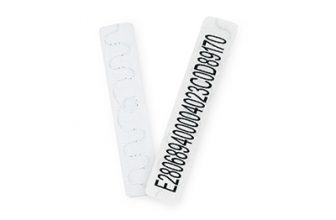
1. Textile RFID Laundry Tags — $0.25–$0.50 per Unit
- Description: Textile tags are the most budget-friendly option, made from flexible, fabric-like materials (e.g., polyester-cotton blends) that integrate seamlessly with lightweight textiles like hotel sheets, napkins, and nurse scrubs.
- Key Features:
- Thin (0.3–0.5mm) and comfortable for wearers
- Blends with fabric to avoid guest/employee discomfort
- Suitable for low-to-moderate wash cycles (200–300 washes)
- Price Drivers:
- Basic textile tags (no customization, HF chips): $0.25–$0.35 per unit
- Customized textile tags (branded printing, UHF chips): $0.35–$0.50 per unit
- Best For: Small hotels (20–50 rooms), boutique laundries, and uniform programs where aesthetics and comfort matter more than industrial-grade durability.
- Example: A 30-room hotel needs 900 textile tags (3 sets of linens per room: sheets, towels, pillowcases). Basic HF textile tags would cost $225–$315 upfront—far less than silicone alternatives, and guests won’t notice the tags on linens.
2. Silicone RFID Laundry Tags — $0.50–$1.00 per Unit
- Description: Silicone tags are the most popular choice for industrial use, thanks to their exceptional durability and resistance to harsh conditions.
- Key Features:
- Withstands 500+ wash cycles at temperatures up to 120°C
- Resists harsh chemicals (bleach, detergents, industrial cleaners)
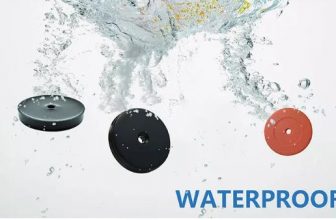
- Waterproof and dustproof (IP68 rating)
- Price Drivers:
- Standard silicone tags (UHF chips, no customization): $0.50–$0.70 per unit
- Medical-grade silicone tags (sterilization-compatible, ISO 10993 certified): $0.70–$1.00 per unit
- Best For: Industrial laundries processing 5,000+ textiles weekly, hospitals, and manufacturing facilities where tags face extreme wash/chemical conditions.
- Example: An industrial laundry serving 20 restaurant clients needs 5,000 silicone tags for aprons and tablecloths. Standard UHF silicone tags would cost $2,500–$3,500 upfront. The tags withstand daily industrial washes, so the laundry avoids replacing 20% of tags annually (a $500–$700 savings).
3. Reinforced Plastic RFID Laundry Tags — $0.80–$1.50 per Unit
- Description: Reinforced plastic tags are the most durable (and expensive) option, designed for environments where tags face physical abuse beyond standard laundry cycles.
- Key Features:
- Shatterproof and puncture-resistant (ideal for construction, oil/gas workwear)
- Withstands 800+ wash cycles and extreme temperatures (-30°C to 150°C)
- Resists oil, grease, and heavy chemicals
- Price Drivers:
- Standard reinforced plastic tags (UHF chips): $0.80–$1.20 per unit
- Custom-shaped reinforced plastic tags (e.g., button-style, logo-shaped): $1.20–$1.50 per unit (includes mold fees)
- Best For: Construction companies, oil and gas facilities, and any business where tags are exposed to physical damage (e.g., welding sparks, heavy machinery).
- Example: A construction firm with 200 workers needs 600 reinforced plastic tags for work jackets. Standard tags would cost $480–$720 upfront. The tags last 3+ years (vs. 1 year for silicone), so the firm saves $300–$400 annually in replacement costs.
Factor 2: Chip Type — UHF vs. HF and Their Price Differences
The chip inside an RFID laundry tag determines its read range, scanning speed, and compatibility with readers—and it’s a key driver of price. In 2025, two chip types dominate the market: HF (High Frequency) and UHF (Ultra-High Frequency).
1. HF (High Frequency) Chips — $0.10–$0.20 per Chip (Included in Tag Price)
- Technical Specs:
- Frequency: 13.56 MHz
- Read Range: 10–15 cm (close-range scanning)
- Scanning Speed: 5–10 items per second (one-at-a-time scanning)
- Impact on Tag Price:
- Textile tags with HF chips: $0.25–$0.35 per unit (chip accounts for 30–60% of cost)
- Silicone tags with HF chips: $0.50–$0.60 per unit (chip accounts for 20–40% of cost)
- Best For:
- Small-scale operations (e.g., 50-room hotels) where one-at-a-time scanning is sufficient
- Healthcare facilities (tracking sterile gowns, where precise, close-range scanning is required)
- Businesses with existing HF readers (avoids upgrading hardware)
- Cost-Saving Tip: If you only need to scan individual items (e.g., checking out a uniform to an employee), HF chips are more budget-friendly than UHF—no need to pay for long-range capabilities you won’t use.
2. UHF (Ultra-High Frequency) Chips — $0.20–$0.40 per Chip (Included in Tag Price)
- Technical Specs:
- Frequency: 860–960 MHz (region-specific)
- Read Range: 1–8 meters (long-range scanning)
- Scanning Speed: 100+ items per second (bulk scanning)
- Impact on Tag Price:
- Textile tags with UHF chips: $0.35–$0.50 per unit (chip accounts for 40–57% of cost)
- Silicone tags with UHF chips: $0.70–$1.00 per unit (chip accounts for 20–57% of cost)
- Best For:
- Industrial laundries processing 1,000+ textiles daily (bulk scanning cuts labor time)
- Large hotels (100+ rooms) needing to scan carts of linens quickly
- Businesses scaling up their textile operations (UHF supports higher volume)
- Cost-Saving Tip: UHF chips save labor costs even with higher upfront prices. A hotel using UHF can scan a cart of 50 linens in 10 seconds (vs. 5 minutes with HF), saving 4.8 hours weekly—worth $120+ in labor savings per week.
Factor 3: Order Quantity — Bulk Discounts That Slash Per-Unit Costs
Like most industrial products, RFID laundry tag prices drop significantly when you buy in bulk. Suppliers offer tiered pricing to reward larger orders, and the savings can be dramatic—ordering 10,000 tags instead of 1,000 can cut the per-unit cost by 50% or more.
2025 Bulk Pricing for RFID Laundry Tags (Per Unit)
| Order Quantity | Textile Tags (HF) | Textile Tags (UHF) | Silicone Tags (HF) | Silicone Tags (UHF) | Reinforced Plastic (UHF) |
|---|---|---|---|---|---|
| 1,000–4,999 | $0.30–$0.35 | $0.40–$0.50 | $0.55–$0.65 | $0.75–$0.90 | $1.00–$1.20 |
| 5,000–9,999 | $0.25–$0.30 | $0.35–$0.40 | $0.50–$0.55 | $0.65–$0.75 | $0.90–$1.00 |
| 10,000–24,999 | $0.20–$0.25 | $0.30–$0.35 | $0.45–$0.50 | $0.55–$0.65 | $0.80–$0.90 |
| 25,000+ | $0.15–$0.20 | $0.25–$0.30 | $0.40–$0.45 | $0.50–$0.55 | $0.70–$0.80 |
How to Maximize Bulk Savings
- Forecast Your Annual Needs: Calculate how many tags you’ll use in 6–12 months. For example, a 100-room hotel needs 3,000 linens tags annually—order 6,000 to qualify for the 5,000+ tier, cutting per-unit cost by ~17%.
- Combine Tag Types: If you need multiple tag materials (e.g., textile for linens, silicone for robes), order them together to reach a higher quantity tier. A hotel ordering 3,000 textile tags + 2,000 silicone tags = 5,000 total, qualifying for the 5,000+ discount.
- Negotiate for Larger Orders: For orders of 50,000+ tags, most suppliers will offer an extra 5–10% discount (on top of the 25,000+ tier price). An industrial laundry ordering 100,000 silicone tags could save $5,000–$10,000 by negotiating.
- Example: A uniform supplier needs 8,000 tags annually. Ordering 8,000 tags at once (instead of 4,000 twice a year) cuts the per-unit cost of UHF silicone tags from $0.75–$0.90 to $0.65–$0.75—saving $800–$1,200 annually.
Factor 4: Customization — Costs for Branding, Encoding, and Shape
Customization adds value to RFID laundry tags (e.g., branding, custom data) but also increases the price. The cost depends on the type and complexity of customization—balance “nice-to-have” features with your budget to avoid overspending.
1. Branded Printing — $0.05–$0.20 per Unit
- Purpose: Printing logos, company names, or care instructions helps with brand recognition and reduces linen/uniform loss (guests/employees are less likely to take tagged items).
- Common Methods & Costs:
- Dye-Sublimation: Best for textile tags (full-color, long-lasting prints) — $0.05–$0.10 per unit
- Screen Printing: Ideal for silicone tags (single-color, durable) — $0.10–$0.15 per unit
- Laser Engraving: Used for reinforced plastic tags (permanent, high-end) — $0.15–$0.20 per unit
- Cost-Saving Tip: Keep logos simple (single color vs. full color) to reduce printing costs. A hotel using single-color screen printing on 5,000 silicone tags saves $250 vs. full-color printing.
2. Custom Encoding — $0.03–$0.10 per Unit
- Purpose: Encoding custom data (e.g., client IDs, linen types, employee numbers) saves time on manual data entry and reduces errors.
- Encoding Options & Costs:
- Pre-Encoding (UIDs Only): Suppliers add unique identifiers (UIDs) before shipping — $0.03–$0.05 per unit
- Custom Data Encoding: Add specific details (e.g., “Client XYZ, Towel, Size L”) — $0.05–$0.10 per unit
- Cost-Saving Tip: Use pre-encoded UIDs and add custom data in-house with a handheld reader (if you already have one). This eliminates encoding fees—saving $150–$500 for 5,000 tags.
3. Custom Shapes/Sizes — $0.10–$0.50 per Unit + Mold Fees
- Purpose: Custom shapes (e.g., lotus flowers for spas, tool-shaped for construction) or non-standard sizes (smaller for napkins, larger for blankets) make tags more functional or on-brand.
- Cost Breakdown:
- Minor Size Adjustments (e.g., 20x30mm vs. standard 25x35mm): $0.10–$0.20 per unit (no mold fee)
- Full Custom Shapes: One-time mold fee ($500–$1,000) + $0.20–$0.50 per unit
- Cost-Saving Tip: Avoid full custom shapes unless necessary. Minor size adjustments offer flexibility without the high mold fees—e.g., a spa can order smaller textile tags for napkins without paying for a custom mold.
Factor 5: Hidden Costs — Expenses to Watch Out For
When budgeting for RFID laundry tags, don’t forget hidden costs that can add 10–20% to your total expense. These costs are often overlooked but can significantly impact your ROI.
1. Shipping and Handling — 5–15% of Total Order Cost
- Cost Breakdown:
- Small Orders (1,000–5,000 tags): $20–$50 (ground shipping in the U.S.)
- Large Orders (25,000+ tags): $100–$300 (freight shipping, including palletizing)
- International Orders: 10–15% of total order cost (plus customs duties and taxes)
- How to Avoid Overpaying:
- Negotiate free shipping for orders over $2,500 (most suppliers offer this for U.S. orders)
- Order in bulk to reduce the number of shipments (fewer shipments = lower total shipping costs)
- For international orders, work with suppliers who have global distribution centers (reduces shipping time and costs)
2. Replacement Tags — 5–20% of Annual Tag Cost
- Replacement Rates by Material:
- Textile Tags: 15–20% annual replacement (due to fraying, stretching)
- Silicone Tags: 5–10% annual replacement (rarely fail, mostly lost)## Factor 5: Hidden Costs — Expenses to Watch Out For (Continued)
2. Replacement Tags — 5–20% of Annual Tag Cost (Continued)
- Reinforced Plastic Tags: 2–5% annual replacement (high durability, minimal damage)
- Cost Impact Example: A mid-sized hotel with 1,000 textile tags faces $25–$35 in annual replacement costs (15% of 1,000 tags × $0.25–$0.35 per tag). Over 3 years, this adds $75–$105 to the total cost.
- How to Minimize:
- Choose durable tags (silicone/reinforced plastic) for high-wear items (e.g., hotel towels, work uniforms) to lower replacement rates.
- Order 10–15% extra tags upfront (e.g., 1,150 tags instead of 1,000) — bulk pricing makes this cheaper than ordering small batches later (which have higher per-unit costs).
3. Compatibility Testing — $100–$500 (One-Time Cost)
- Why It’s Needed: If you already have RFID readers (e.g., from a previous system), you need to ensure new tags are compatible (e.g., UHF tags work with UHF readers, HF tags with HF readers). Incompatible tags will fail to scan, leading to data gaps and operational delays.
- Cost Breakdown:
- Third-party testing (for formal compliance): $100–$500 (varies by test scope, e.g., wash durability + reader compatibility).
- In-house testing: $0 (if you have staff and equipment to run basic scans).
- How to Avoid Extra Costs:
- Request 50–100 free sample tags from suppliers and test them with your existing readers in-house. Run 5–10 wash cycles to check readability post-laundry — this eliminates the need for paid third-party testing.
- Share your reader model (e.g., Impinj R2000, Zebra DS2200) with suppliers upfront — they can recommend compatible tags to reduce testing needs.
4. Installation Costs — $0.10–$0.30 per Unit
- Cost Source: Attaching tags to textiles (sewing, heat-sealing) requires labor. If you outsource this to the supplier or a third party, it adds to the total cost.
- Cost Breakdown:
- Supplier installation: $0.10–$0.30 per unit (varies by tag type — textile tags take longer to sew than silicone tags to heat-seal).
- In-house installation: $0 (if you train existing staff, e.g., laundry team, to attach tags during off-peak hours).
- Cost Impact Example: A uniform supplier with 5,000 tags would pay $500–$1,500 for outsourced installation. In-house installation eliminates this cost entirely.
- How to Avoid:
- Train 1–2 staff members on tag installation (e.g., sewing textile tags into uniform seams, using a heat sealer for silicone tags). Most suppliers provide free installation guides or short training videos.
- Integrate installation into existing workflows (e.g., laundry staff attach tags while folding clean linens) to avoid disrupting daily operations.
Budget Examples for Different Business Types
To make budgeting concrete, below are 2025 cost breakdowns for three common users of RFID laundry tags — small hotels, industrial laundries, and construction companies. Each example includes upfront costs, annual recurring costs, and 2-year total cost of ownership (TCO) to show long-term value.
1. Small Hotel (30 Rooms, 5 Staff Members)
- Needs: 900 linen tags (3 sets per room: sheets, towels, pillowcases) + 50 staff uniform tags (polos, aprons) = 950 total tags.
- Tag Choice: Textile RFID laundry tags with HF chips (budget-friendly, invisible to guests).
- Upfront Costs:
- 950 textile tags (no customization, HF chips): $0.25–$0.35 per unit = $237.50–$332.50
- Shipping (U.S. ground): $20–$30
- Total Upfront: $257.50–$362.50
- Annual Recurring Costs:
- Replacement tags (15% of 950 tags): $35.75–$49.95
- Total Annual: $35.75–$49.95
- 2-Year TCO: $257.50–$362.50 + ($35.75–$49.95 × 2) = $329–$462.40
- ROI Context: The hotel reduces linen loss from 10% to 5% with RFID tracking, saving ~$600 annually (5% of 900 linens × $15–$30 per linen replacement cost). The 2-year TCO is covered in just 6–8 months.
2. Mid-Sized Industrial Laundry (Serves 20 Clients, 10,000 Textiles Weekly)
- Needs: 15,000 tags (covers restaurant aprons, hotel linens, healthcare scrubs).
- Tag Choice: Silicone RFID laundry tags with UHF chips (durable, fast bulk scanning).
- Upfront Costs:
- 15,000 silicone tags (basic customization: client ID encoding, UHF chips): $0.65–$0.75 per unit = $9,750–$11,250
- Shipping (freight, U.S. domestic): $150–$200
- Total Upfront: $9,900–$11,450
- Annual Recurring Costs:
- Replacement tags (8% of 15,000 tags): $780–$900
- Software subscription (basic RFID tracking): $500–$800 (optional, for inventory management)
- Total Annual: $1,280–$1,700
- 2-Year TCO: $9,900–$11,450 + ($1,280–$1,700 × 2) = $12,460–$14,850
- ROI Context: The laundry cuts sorting labor time by 40% (from 8 hours to 4.8 hours daily), saving ~$15,000 annually (4.8 hours × $15/hour × 260 workdays). It also avoids $5,000 in client refunds from misassigned textiles — the 2-year TCO is recovered in less than 1 year.
3. Construction Company (200 Employees, Heavy Workwear)
- Needs: 600 tags (3 uniforms per employee: jackets, pants, shirts).
- Tag Choice: Reinforced plastic RFID laundry tags with UHF chips (shatterproof, job site-resistant).
- Upfront Costs:
- 600 reinforced plastic tags (no customization, UHF chips): $0.80–$1.00 per unit = $480–$600
- Shipping (U.S. ground): $25–$40
- Total Upfront: $505–$640
- Annual Recurring Costs:
- Replacement tags (3% of 600 tags): $14.40–$18
- Total Annual: $14.40–$18
- 2-Year TCO: $505–$640 + ($14.40–$18 × 2) = $533.80–$676
- ROI Context: Uniform loss drops from 15% to 3% with RFID tracking — the company saves ~$1,200 annually (12% of 600 uniforms × $16.67 average uniform cost). The 2-year TCO is covered in 5–6 months.
Tips to Get the Best Value for Your RFID Laundry Tag Investment
Choosing RFID laundry tags isn’t just about finding the lowest upfront price — it’s about maximizing long-term value by aligning tag features with your workflow. Below are 5 actionable tips to avoid overspending and boost ROI.
1. Match Tag Durability to Your Laundry Cycle
- Why It Matters: A tag’s lifespan should align with the textile’s expected use. For example, a hotel towel washed 50 times annually needs a tag that lasts 2–3 years (100–150 washes) — a cheap textile tag (200–300 washes) works, but a reinforced plastic tag (800+ washes) would be overkill.
- Action Step: Calculate the annual wash cycles for key items:
- Hotel towels: 50–70 washes/year
- Industrial aprons: 100–120 washes/year
- Construction jackets: 20–30 washes/year
- Example: For industrial aprons (100 washes/year), a silicone tag (500+ washes) lasts 5+ years — a better value than a textile tag (200–300 washes) that needs replacement after 2–3 years.
2. Leverage Bulk Discounts Without Overordering
- Common Mistake: Ordering more tags than you need to qualify for a lower tier (e.g., 5,000 tags instead of 3,000) — excess tags sit unused, tying up cash.
- Action Step:
- Forecast 6–12 months of tag needs (e.g., 3,000 tags for 6 months = 6,000 tags for 12 months).
- Combine orders for multiple textile types (e.g., 3,000 linen tags + 2,000 uniform tags = 5,000 total) to reach a higher tier without overordering for a single item.
- Example: A restaurant chain needs 3,000 apron tags and 2,000 napkin tags. Ordering 5,000 total tags (instead of 3,000 + 2,000 separately) qualifies for the 5,000+ tier, cutting per-unit cost by ~14% (from $0.50–$0.70 to $0.45–$0.65 for silicone tags).
3. Negotiate With Suppliers for Added Value
- What to Ask For:
- Free shipping for orders over $2,500 (most suppliers waive U.S. ground shipping for large orders).
- Extended warranties (e.g., 2-year warranty on silicone tags instead of 1 year) — this covers replacement costs if tags fail prematurely.
- Discounts for long-term contracts (e.g., “We’ll order 10,000 tags annually for 2 years — can we get a 5% discount?”).
- Success Example: A small laundry negotiated a 7% discount on 10,000 silicone tags by committing to annual reorders — saving $350–$455 upfront (7% of $5,000–$6,500 total cost).
4. Use Tags to Reduce Other Operational Costs
- Beyond Loss Reduction: RFID tags provide data that cuts costs in other areas:
- Inventory Optimization: Real-time inventory data lets you reduce overstock (e.g., a hotel cuts linen stock from 4 sets per room to 3.5, freeing up $18,000 in cash).
- Labor Savings: Bulk scanning with UHF tags reduces counting time — an industrial laundry saves 10 hours weekly (worth $150–$200) by replacing manual counts with UHF scans.
- Textile Lifespan Extension: Tracking wash cycles lets you replace items only when worn (e.g., a hospital retires scrubs after 150 washes instead of 120, extending lifespan by 25%).
- Action Step: Identify 1–2 non-loss costs to target (e.g., labor, overstock) — use tag data to measure savings and boost overall ROI.
5. Work With Industry-Specific Suppliers
- Why It Matters: General RFID suppliers may not understand niche needs (e.g., hospitals need sterilization-compatible tags, construction firms need shatterproof tags). Industry-specific suppliers offer:
- Pre-tested tags (e.g., medical-grade silicone tags certified for autoclaving).
- Workflow-specific advice (e.g., “Attach tags to the hem of hotel sheets to avoid guest discomfort”).
- Red Flag to Avoid: Suppliers who don’t ask about your industry or use case — they may sell you generic tags that don’t meet your needs (e.g., non-sterile tags for a hospital).
Conclusion
Understanding RFID laundry tag prices in 2025 requires looking beyond upfront costs to total value. A $0.25 textile tag works for a small hotel’s linens, but a $1.00 reinforced plastic tag is worth the investment for a construction company’s workwear — the key is aligning tag features (material, chip type, durability) with your workflow.
The 5 factors outlined in this guide — tag material, chip type, order quantity, customization, and hidden costs — all shape your budget, but the biggest ROI comes from:
- Choosing durable tags to lower replacement costs.
- Using bulk pricing to cut per-unit costs.
- Leveraging tag data to reduce labor and overstock expenses.
If you’re ready to take the next step, revisit our foundational guide RFID Laundry Tag: The Complete Guide to Smart Textile Tracking in 2025 to learn more about tag types, readers, and management systems. Or contact us today for a custom quote — we’ll help you find the right RFID laundry tags to reduce costs, boost efficiency, and get the most value from your investment.