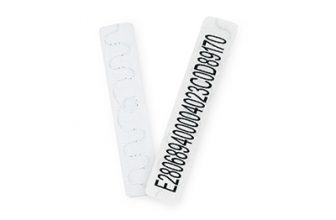

In 2025, the demand for RFID tags on clothes is growing at an unprecedented rate. From global retail chains to industrial laundries, these smart clothing tags have become a critical tool for tracking garments, preventing losses, and improving operational efficiency. As the fashion industry embraces digital transformation, understanding the RFID tags on clothes definition, types, applications, and future trends is essential for businesses looking to stay ahead of the curve.
In this complete guide, we’ll cover everything from what RFID tags are, how they work, the different types available for clothing, real-world use cases, and how to choose the right solution for your business. Whether you are a retailer, uniform rental company, or textile manufacturer, this guide will give you the technical insights and purchasing strategies you need to make informed decisions.
What Are RFID Tags on Clothes? (RFID Tags on Clothes Definition)
RFID (Radio Frequency Identification) is a wireless communication technology that uses radio waves to identify and track objects. In the context of the apparel industry, RFID tags are small devices embedded in or attached to garments to enable automatic identification and data capture.
Typically, an RFID tag consists of three main components:
- Microchip – Stores unique identification data, such as the garment’s SKU, batch number, and manufacturing details.
- Antenna – Sends and receives radio signals from the RFID reader.
- Encapsulation Material – Protects the chip and antenna, especially in applications where the tag must withstand heat, water, or chemicals.
RFID tags work by receiving a signal from a reader (interrogator) and responding with stored information. Unlike traditional barcodes, RFID tags do not require direct line-of-sight scanning and can process multiple items simultaneously, significantly reducing scanning time.
Why the clothing industry prefers RFID over barcodes:
- Faster inventory scanning without manual handling of each item.
- Durability in harsh environments, such as industrial laundries.
- Ability to integrate into fabric without affecting garment comfort.
Types of RFID Tags for Clothing
Passive RFID Tags for Clothing
Passive RFID tags have no internal power source. They are activated when they receive energy from the RFID reader’s signal. These tags are cost-effective, long-lasting, and widely used in clothing retail.
- Key Features: No battery, low cost, thin profile, long shelf life.
- Applications: Retail inventory management, anti-theft systems, self-checkout.
- Common Chips: MIFARE, NTAG, Monza series.
These tags are ideal for large-scale deployments where the reading range requirement is moderate, and cost control is a priority.
Active RFID Tags for Clothing
Active RFID tags contain a built-in battery that powers the chip and antenna, enabling longer read ranges (up to 100 meters or more) and more advanced features like environmental monitoring.
- Key Features: Long read range, can store more data, real-time location tracking.
- Applications: High-value apparel tracking, warehouse automation, logistics monitoring.
These tags are more expensive and typically reserved for specialty applications where the garment’s value or tracking requirements justify the cost.
Washable & Laundry RFID Tags
Washable RFID tags are designed for harsh laundering processes. They are encapsulated in heat-resistant and waterproof materials to withstand repeated washing, ironing, and chemical exposure.
- Key Features: Resistant to high temperatures, water, and chemicals.
- Applications: Hotels, hospitals, uniform rental companies, industrial laundries.
Learn more about our RFID chips for laundry designed for industrial-grade washing.
Applications of RFID Tags in the Clothing Industry
Retail Inventory Management
RFID enables real-time inventory tracking, allowing retailers to instantly locate items and reduce out-of-stock situations. For example, Zara uses RFID to track every garment from factory to store shelf, enabling accurate restocking and improved sales forecasting.
Anti-Theft & Loss Prevention
RFID gates at store exits can detect tagged items that have not been deactivated at checkout, reducing shrinkage. Unlike traditional EAS tags, RFID can also provide item-specific details, helping in loss analysis.
Laundry & Textile Tracking
Hotels, hospitals, and industrial laundries use RFID tags to track linens and uniforms. Integrated with ERP systems, RFID can automate the check-in and check-out process, reduce losses, and extend textile lifespan by monitoring wash cycles.
Customer Experience Enhancement
Smart mirrors in fitting rooms can detect RFID-tagged clothing and display product details, color options, and accessory suggestions. This interactive technology enhances customer engagement and increases upselling opportunities.
Benefits of RFID Tags on Clothes
- Accurate Inventory Management – Real-time visibility of stock levels across all locations.
- Reduced Labor Costs – Automated scanning eliminates manual counting.
- Enhanced Customer Satisfaction – Faster checkouts, personalized service.
- Extended Garment Life – Tracking wash cycles helps maintain fabric quality.
How to Choose the Right RFID Tags for Clothing
When selecting RFID tags for apparel, consider the following:
- Environmental Requirements: Will the tag be exposed to water, heat, or chemicals?
- Chip Type: HF (High Frequency) or UHF (Ultra High Frequency) depending on read range needs.
- Attachment Method: Sewn-in, heat-sealed, or embedded.
- MOQ & Customization: Bulk purchasing can significantly reduce per-unit costs.
As a direct RFID factory, we offer customizable solutions tailored to your brand and operational needs. From chip selection to encapsulation design, our team ensures your tags perform reliably in your specific environment.
Future Trends in Smart Clothing Tags
- IoT Integration: RFID data combined with IoT systems for advanced analytics on consumer behavior.
- Eco-Friendly RFID Tags: Biodegradable materials to reduce environmental impact.
- Rewritable RFID Tags: Tags that can be updated with new data, extending their usability.
Conclusion
RFID tags on clothes are transforming the apparel industry by enabling faster inventory tracking, improving customer experiences, and reducing losses. In 2025, businesses that adopt smart clothing tags will gain a competitive edge in both operational efficiency and customer satisfaction.
Whether you need RFID chips for retail, laundry, or logistics, our factory offers cost-effective, high-quality, and fully customizable solutions. Contact us today to get a wholesale quote or a tailored RFID tagging plan for your business.
Keywords: RFID tags on clothes definition, smart clothing tags, RFID chips, RFID technology