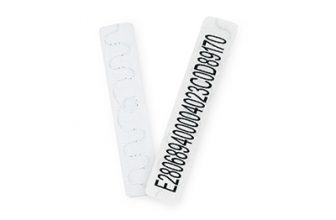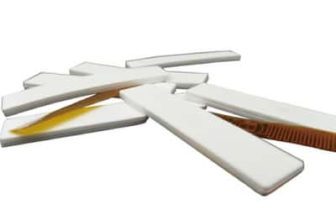

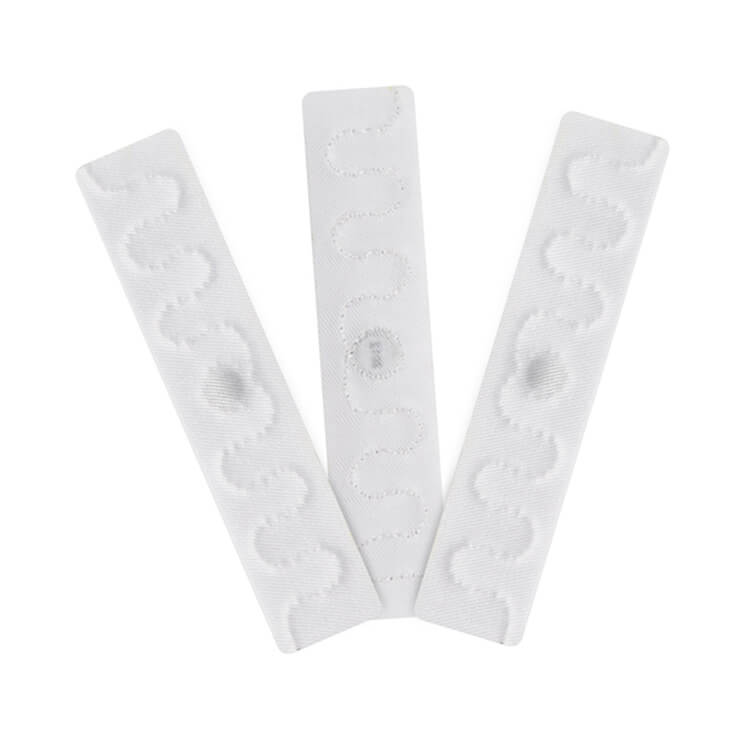
Scanning Range
- RFID laundry tags support long-range scanning (up to 8 meters for UHF models), while barcodes require line-of-sight and close proximity (5–10 cm).
Bulk Processing Speed
- RFID can scan 100+ textile items simultaneously, but barcodes need individual scanning (1 item per 2–3 seconds).
Durability
- Industrial-grade RFID tags withstand 500+ wash cycles at 120°C; barcodes fade or smudge after 50–100 washes.
Data Storage
- RFID tags store 96–256 bits of data (e.g., wash cycles, client IDs), while barcodes only hold 20–30 characters (limited to basic IDs).
Key Takeaway
- RFID excels at high-volume, harsh laundry environments, while barcodes work for low-scale, low-wear tracking.
Cost Comparison: RFID Laundry Tag vs Barcode (2025 Prices)
RFID Laundry Tag Costs
- Per Unit Price: (0.25–)1.50 (textile tags: (0.25–)0.50; silicone tags: (0.50–)1.00; reinforced plastic tags: (0.80–)1.50).
- Reader Costs: Handheld RFID readers: (500–)1,000; fixed RFID readers: (1,500–)3,000.
- Annual Maintenance: (200–)500 (tag replacements: 5–20% annually).
Barcode Costs
- Per Unit Price: (0.01–)0.05 (paper labels: (0.01–)0.02; waterproof polyester labels: (0.03–)0.05).
- Reader Costs: Handheld barcode scanners: (100–)300; fixed barcode scanners: (300–)800.
- Annual Maintenance: (300–)800 (label replacements: 40–60% annually due to wear).
Total 2-Year TCO for 1,000 Items
- RFID: (550–)2,300 (tags + reader + maintenance).
- Barcode: (420–)1,900 (labels + reader + maintenance).
Note: RFID becomes cheaper than barcode for 5,000+ items due to lower replacement rates.
Performance in Laundry-Specific Scenarios
1. High-Volume Industrial Laundries (10,000+ Items Weekly)
- RFID Advantages:
- Scan 50+ linens in a cart in 10 seconds (cuts labor time by 60%).
- Withstand bleach and high-temperature washes (no re-labeling mid-cycle).
- Track items across multiple clients (store client IDs in tags).
- Barcode Limitations:
- Requires sorting items to scan individually (adds 2–3 hours daily).
- Labels peel off during washing (40% of labels need replacement weekly).
- Best Fit: RFID.
2. Small Hotels (20–50 Rooms, 500–1,000 Linens)
- RFID Advantages:
- Reduces linen loss by 30–40% (track last scan location, e.g., “Room 203”).
- Automates inventory counts (1 staff member finishes in 30 minutes).
- Barcode Advantages:
- Lower upfront cost ((50–)100 for 1,000 labels + $100 scanner).
- Simple to implement (no training needed for basic scanning).
- Best Fit: Barcode for 300 linens.
3. Healthcare Facilities (Sterile Garments)
- RFID Advantages:
- Medical-grade silicone tags survive autoclaving (200+ cycles).
- Store sterilization dates (ensures compliance with ISO 11135).
- Barcode Limitations:
- Labels melt during autoclaving (100% replacement after each sterilization).
- No data storage (can’t verify sterilization status).
- Best Fit: RFID.
How to Choose: 4-Step Decision Framework
- Calculate Your Textile Volume: Choose barcode if 1,000 items.
- Assess Wash Cycle Frequency: RFID for items washed >50 times/year; barcode for <50 times/year.
- Evaluate Data Needs: RFID if you need to track wash cycles, client IDs, or locations; barcode for basic ID tracking.
- Compare Long-Term ROI: For 3+ years of use, RFID saves 20–30% vs barcode (lower replacement costs).
Real-World Case Studies (2025)
Case 1: Industrial Laundry (Houston, TX)
- Switch from Barcode to RFID:
- Labor time reduced from 8 hours to 3 hours daily (saves $15,600 annually).
- Label replacement costs dropped from (2,000 to )300 monthly.
- ROI achieved in 8 months.
Case 2: Small Hotel (Asheville, NC)
- Stuck with Barcode:
- Spends $400 monthly on label replacements (60% of labels peel off).
- Inventory counts take 2 staff members 4 hours weekly.
- Planning to switch to RFID in 2026 (ROI projected at 10 months).
Case 3: Hospital (Chicago, IL)
- Uses RFID for Sterile Gowns:
- Eliminated 100% of “expired gown” incidents (tracks sterilization dates).
- Reduced garment loss by 50% (tracks gown movement between ORs).
Future Trends: 2025–2030
- RFID Cost Reduction: UHF RFID tag prices to drop to (0.15–)1.00 by 2027 (bulk orders).
- Barcode Innovation: Waterproof, heat-resistant barcode labels (but still limited to 100–150 washes).
- Hybrid Systems: More businesses combining RFID (for high-wear items) and barcode (for low-wear items) by 2028.
Final Tip
- Test both technologies with 100–200 items before full deployment—most suppliers offer free samples. -# Hybrid System Implementation Guide: Combine RFID and Barcode for Optimal Results
When to Choose a Hybrid System
- Your business has mixed textile types (e.g., high-wear work uniforms + low-wear napkins).
- You want to balance cost (barcode for low-volume items) and efficiency (RFID for high-volume items).
- You’re transitioning from barcode to RFID and need a temporary overlap.
Step-by-Step Implementation
Categorize Textiles by Wear and Volume
- RFID-Only Items: High-wear, high-volume (e.g., industrial aprons, hospital scrubs washed 100+ times/year).
- Barcode-Only Items: Low-wear, low-volume (e.g., restaurant napkins, hotel decorative pillows washed <20 times/year).
- Dual-Tagged Items: Critical but moderate-use (e.g., hotel towels—RFID for tracking, barcode for backup).
Select Compatible Hardware
- Choose a multi-functional scanner (e.g., Zebra DS2200) that reads both RFID and barcode—avoids buying separate devices (\$300–\$500 per unit).
- Use cloud-based tracking software (e.g., TagMatiks) that integrates data from both technologies into one dashboard.
Set Up Workflows for Each Technology
- RFID Workflow: Use fixed readers at laundry intake/output for bulk scanning; handheld readers for inventory checks.
- Barcode Workflow: Assign staff to scan low-volume items during folding; use mobile apps (e.g., Scandit) for on-the-go scanning.
Calculate 2-Year TCO for Hybrid vs Single Technology
- Example: A 100-room hotel with 5,000 textiles (3,000 high-wear towels + 2,000 low-wear napkins)
- Hybrid TCO: \$1,800 (3,000 RFID tags: \$1,500 + 2,000 barcode labels: \$100 + 1 multi-scanner: \$300 + maintenance: \$300)
- RFID-Only TCO: \$2,500 (5,000 RFID tags: \$2,500 + 1 RFID scanner: \$500 + maintenance: \$500)
- Barcode-Only TCO: \$2,200 (5,000 barcode labels: \$250 + 1 barcode scanner: \$300 + maintenance: \$1,650)
- Key Benefit: Hybrid systems save 15–25% on TCO vs single-technology setups for mixed textile portfolios.
FAQs: Common Questions About RFID vs Barcode for Laundry Tracking
1. Can I reuse RFID tags and barcode labels on new textiles?
- RFID Tags: Yes—industrial-grade silicone/RFID tags can be removed from worn textiles (e.g., torn aprons) and sewn onto new ones, reducing replacement costs by 40%.
- Barcode Labels: No—most labels peel or damage textiles when removed; reusing is not feasible (adds \$0.03–\$0.05 per new textile).
2. How do RFID and barcode perform in wet or dirty conditions?
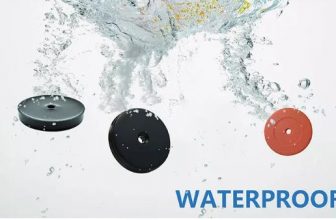
- RFID: UHF RFID tags with IP68 rating work in wet/dirty environments (e.g., soiled linens)—read rate remains 95%+ even with moisture.
- Barcode: Water or dirt smudges barcodes, leading to 30–50% read failure—requires cleaning textiles before scanning (adds 1–2 hours daily).
3. Do I need IT support to set up RFID or barcode systems?
- RFID: Basic setups (handheld reader + cloud software) need no IT support—suppliers provide 30-minute training videos. Enterprise setups (multiple fixed readers + EHR integration) may need 1–2 hours of IT help.
- Barcode: All setups are plug-and-play—staff can start scanning within 10 minutes (no IT support required).
4. Which technology is more secure for client data (e.g., hotel guest info, hospital patient data)?
- RFID: UHF RFID tags can encrypt data (e.g., client IDs) and integrate with HIPAA/GDPR-compliant software—reduces data breach risk.
- Barcode: Barcodes store unencrypted data—anyone with a scanner can access basic IDs (higher risk for sensitive industries like healthcare).
5. What’s the minimum order quantity for RFID tags vs barcode labels?
- RFID Tags: Suppliers require minimum orders of 500–1,000 tags (bulk pricing starts at 5,000 units).
- Barcode Labels: Minimum orders of 100 labels (bulk pricing starts at 1,000 units)—ideal for small businesses testing the technology.
Final Decision Checklist: Choose RFID, Barcode, or Hybrid in 2025
Choose RFID if:
- You process >1,000 textiles weekly.
- Textiles are washed >50 times/year.
- You need to track wash cycles, locations, or client data.
- Your budget allows $500+ upfront for hardware.
Choose Barcode if:
- You process <1,000 textiles weekly.
- Textiles are washed <50 times/year.
- You only need basic ID tracking.
- Your upfront budget is <$300.
Choose Hybrid if:
- You have mixed textile types (high-wear + low-wear).
- You want to test RFID without replacing barcode entirely.
- You want to balance cost and efficiency.
Supplier Selection Tips for RFID and Barcode Solutions
Key Criteria for Evaluating Suppliers
- Industry Experience: Prioritize suppliers with 3+ years in laundry/textile tracking (not general RFID/barcode providers). They understand laundry-specific challenges (e.g., tag durability in bleach, barcode smudging).
- Sample Availability: Reputable suppliers offer 50–100 free samples (RFID tags or barcode labels) for testing—avoid suppliers who charge for samples (adds $20–$50 in unnecessary costs).
- Support Services: Look for suppliers with 24/7 technical support (critical for laundry facilities operating 3 shifts) and free training (on-site or virtual) for staff.
- Integration Capabilities: For RFID suppliers, confirm their tags work with your existing readers (e.g., Impinj, Zebra); for barcode suppliers, ensure labels are compatible with your scanner (e.g., Honeywell, Datalogic).
Red Flags to Avoid
- Suppliers who don’t ask about your workflow (e.g., wash frequency, textile type)—they may sell incompatible products (e.g., non-waterproof barcode labels for industrial laundries).
- Suppliers with no client references in the laundry industry—ask for 2–3 references (e.g., a local hotel or industrial laundry) to verify performance.
- Suppliers who lock you into long-term contracts (1+ years) without a trial period—insist on a 30–60 day pilot to test tags/labels in your facility.
Cost Negotiation Strategies
- Bulk Discounts: For RFID tags, negotiate 5–10% off for orders of 10,000+ units; for barcode labels, ask for 10–15% off for 5,000+ units.
- Bundle Deals: Combine hardware (scanners) and software (tracking systems) for a 15–20% discount—e.g., a supplier may offer a $300 multi-scanner + $200 cloud software for $400 (saves $100).
- Warranty Extensions: Request a 2-year warranty for RFID tags (standard is 1 year) and 6-month warranty for barcode labels (standard is 3 months)—reduces replacement costs if products fail early.
Top Supplier Recommendations (2025)
- RFID Specialists:
- BlueStar RFID: Focuses on industrial laundry tags (silicone UHF tags: $0.60–$0.90 per unit) with 24/7 support and free sample testing.
- TagMatiks: Offers end-to-end solutions (tags + readers + software) with HIPAA-compliant options for healthcare facilities.
- Barcode Specialists:
- Avery Dennison: Provides waterproof polyester barcode labels ($0.03–$0.05 per unit) that withstand 50+ washes.
- Zebra Technologies: Sells bundle deals (scanner + labels) for small hotels—e.g., DS2200 scanner + 1,000 labels for $350 (saves $50 vs buying separately).
Post-Implementation Optimization Tips
1. Monitor Read Rate and Replacement Rates
- For RFID: Track read rate weekly—aim for 95%+ (if below 90%, adjust reader position or tag placement).
- For Barcode: Log label replacement rates—if >50% monthly, switch to waterproof labels (adds $0.02 per unit but cuts replacements by 30%).
2. Train Staff on Best Practices
- RFID Training: Teach staff to avoid scanning near metal (interferes with UHF signals) and to check tag placement monthly (sew loose tags immediately).
- Barcode Training: Show staff to scan labels at a 45° angle (reduces read errors) and to wipe dirty labels with a damp cloth (avoids smudging).
3. Update Software Regularly
- For RFID software: Install monthly updates to improve bulk scanning speed (updates can reduce scan time by 10–15%).
- For Barcode software: Sync data daily with your inventory system (prevents discrepancies between scanned and actual stock).
4. Reassess Technology Annually
- If your textile volume grows by 30%+ (e.g., from 1,000 to 1,300 items weekly), consider upgrading from barcode to RFID—ROI typically improves as volume increases.
- If you add high-wear items (e.g., industrial aprons), switch from barcode to RFID for those items (cuts replacement costs by 40%).
Final Note
The best tracking technology isn’t static—it should evolve with your business. By combining regular performance checks with supplier support, you can ensure your system remains efficient and cost-effective for years.